"I would like to recommend a fantastic person who inspires many preschools in the municipality of Skövde. He is truly incredible in his holistic approach and what the children get to experience in his studio. I think an interview with him would inspire many people."
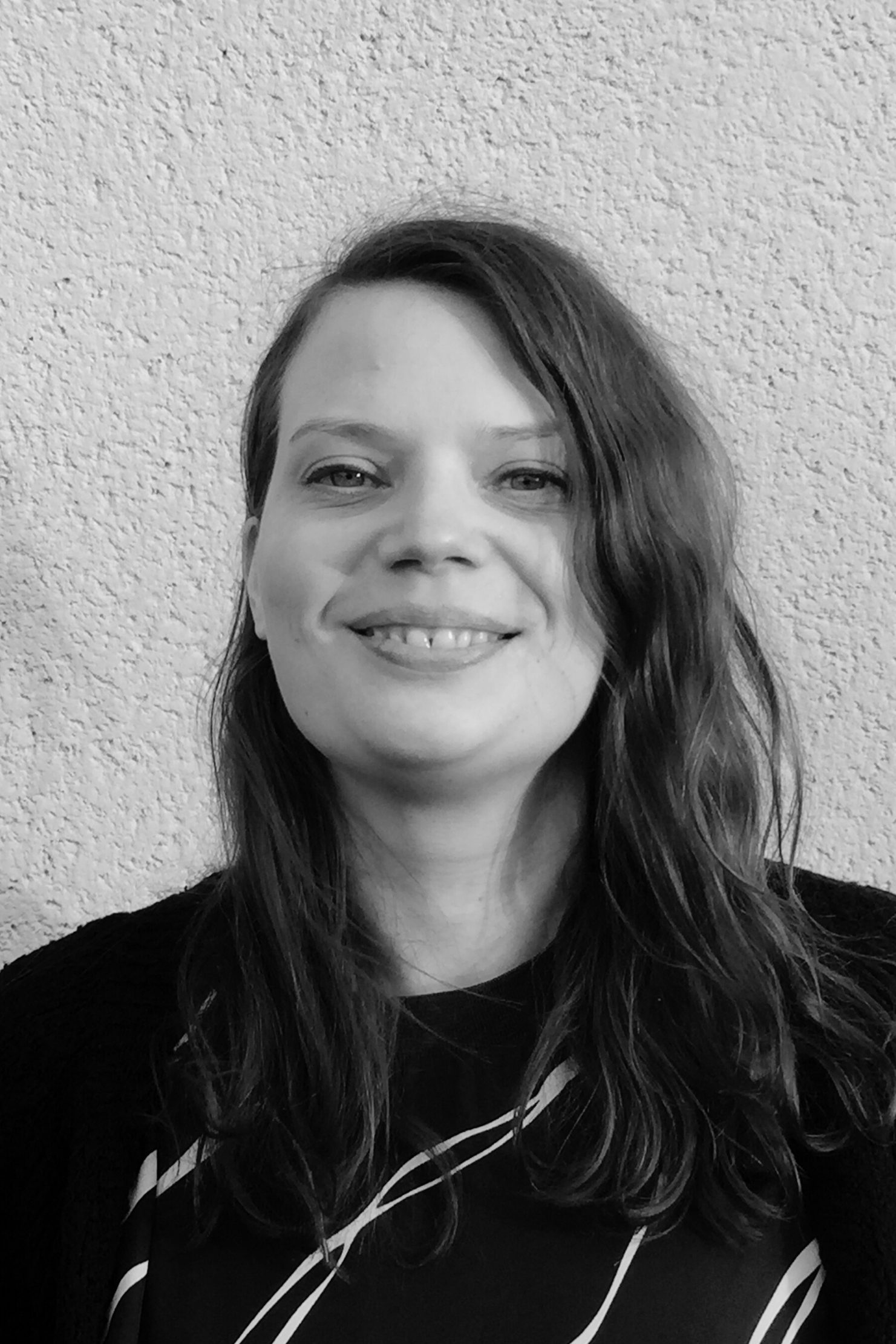
The tip that appears in Modern Barndom's email concerns Daniel Bertilsson, studio artist and preschool teacher at two preschools in Skövde municipality. Meet him here in a conversation about eye-openers, the importance of genuine environments, and aesthetics as a linguistic bridge.
– It is sometimes said that the professions that today's children will work in do not yet exist. That is why I believe that those of us who work in preschool must be innovative and creative. I once read that "in the borderland between fact and fantasy, amazing things can happen," and that is where, in that borderland, I strive to be.
Daniel Bertilsson works as an art teacher at the Värsås and Rosenhaga preschools in Skövde municipality. He tends to think that ending up in preschool was a coincidence, although that is only partly true. His mother worked in childcare with children in need of special support, an activity that Daniel had the opportunity to try out. So perhaps his decision to study preschool teaching at HLK (the School of Education and Communication) at Jönköping University was not entirely random. He graduated in 2007, and just a few years later he started working at Värsås preschool: "a rural preschool, but that suits me as I live on a farm in the countryside." It was here that he first encountered the Reggio Emilia approach in earnest.
I had certainly come into contact with philosophy during my education, but the strongly rooted practice was something else. The educators there had been working with inspiration for many years before I started, and it was truly an eye-opener. How the children's thoughts were taken seriously, and in addition, the collegial and reflective work. Things like the importance of everyday life and teaching on the children's terms. And the educational documentation! I immediately noticed that it made a huge difference both for me in my role and for the children. A lot has happened over the years, many of those who worked there then are no longer there, but the spirit really remains in the walls.
In 2019, Daniel began to consider further education. Since he had always been interested in creative pursuits, partly inspired by his childhood home where his father had previously worked as a carpenter, he decided to pursue a career as a studio artist. For the past three years, he has been working full-time as a studio artist, dividing his time between the two preschools.
My studios are located in the respective preschool courtyards. This makes my base a central point in the buildings, where many children, colleagues, and guardians pass through every day. I work very slowly and try to engage with every child, but since time is limited, it is mainly the older children who come for the morning and afternoon sessions. We try to rotate so that all children who are interested can come to the studio and stay as long as they want.
He mainly works directly with children, but occasionally also provides training for educators.
Since I have a multilingual program with the children, the teachers also come into contact with aesthetics in this way. We discuss a lot, and I make sure to introduce expressions they are not used to, such as plaster or papier-mâché. Knowledge of materials is important for daring to try new things. In addition, there is digitization. I love working with my hands, but something also happens when we digitally manipulate the things we have made analogously – it brings them to life and connects two worlds.
He says that he keeps up to date with the various processes and projects at his home studios, while also creating his own. The focus is on working with the same thing for a long time, having a clear common thread, and avoiding happenings. Nature is a major source of inspiration, and Daniel explains that both studios have cabinets of curiosities, glass cabinets filled with moose skulls, deer antlers, insects, and other natural materials.
– I want to highlight the authenticity of my environments. It's also a way of taking children seriously and making what they do special. If we're going to study insects, the children should get to see them in real life, not just in pictures or plastic models. I'm a bit of a junk collector who always has my eyes on the ground. Since I live on a horse farm, I have many outbuildings to find things in.
The preschools where Daniel works differ somewhat, both in terms of location—Värsås is in the countryside and Rosenhaga is in central Skövde—and language, with Rosenhaga being multilingual. The conditions are different, but Daniel says that aesthetics serve as a bridge between languages and cultures.
"My philosophy is the same regardless of where I am, and even though I can see that the children have different levels of prior knowledge, language is not a barrier. They are slightly different worlds—in Värsås, no one bats an eyelid if a parent picks up their child in a tractor, while the children in Rosenhaga would be amazed—but I work actively to create equality between them. At both places, I want to create an irresistible environment that attracts and inspires curious, inquisitive, and imaginative children, says Daniel, concluding:
– It is important that the work never becomes routine. I often challenge myself as a way to grow, and I think it is the same for children. We need to challenge them so that they can find what they are passionate about. A six-year-old boy here at Rosenhaga greets me every Monday and says, "Hi, what exciting things are we going to do today?" I think that is a good sign.
Text: Elin Mellerstedt, editor and publisher
Photo: Ann Bertilsson